Whole Body MRI Screening Is It Necessary for Preventive Health
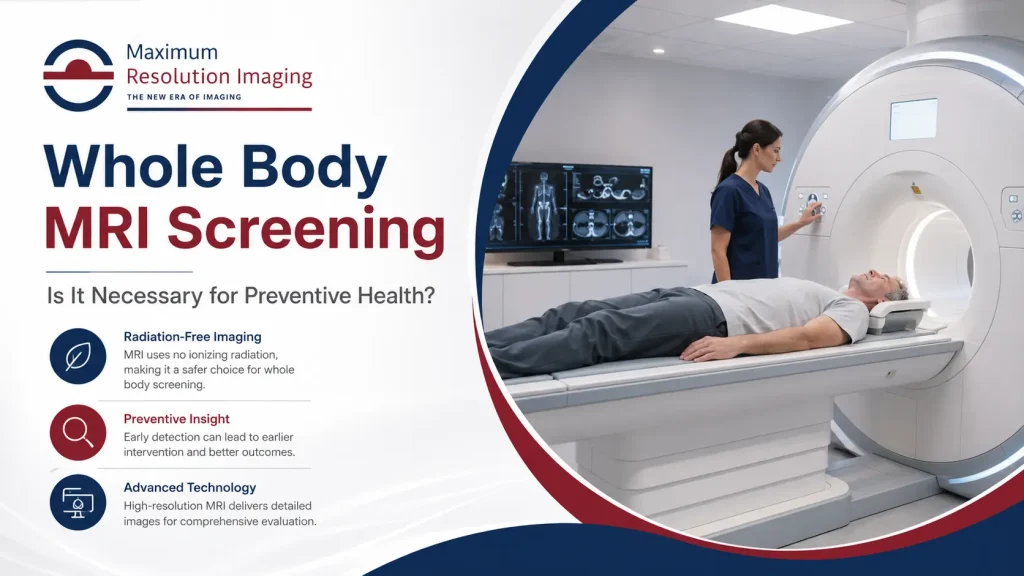
Preventive health is about finding risks early, staying informed, and taking action before a condition becomes more serious. For many patients, this includes routine checkups, blood work, age-based screenings, and lifestyle changes. In recent years, whole body MRI screening has also become a topic of interest for people who want a broader look at their internal health.
A whole body MRI screening, also called a full body MRI scan, can create detailed images of multiple areas of the body without using ionizing radiation. But does that mean everyone needs one? Not always. Whole body MRI screening may be helpful for some patients, but it should be understood as one part of a larger preventive health plan.
At Maximum Resolution Imaging Center Texas, patients in Richmond, Houston, and nearby areas can learn more about advanced MRI services and whether a preventive imaging scan may be appropriate for their health goals.
What Is Whole Body MRI Screening?
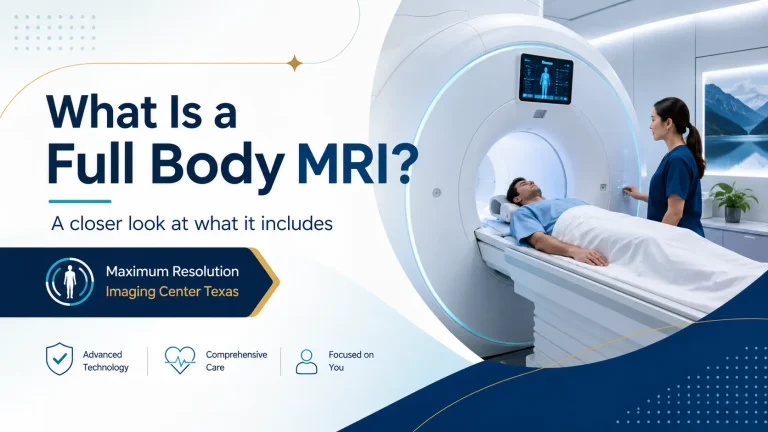
Whole body MRI screening is an imaging exam that uses magnetic fields and radio waves to create detailed pictures of internal body structures. Unlike X-rays or CT scans, MRI does not use ionizing radiation.
A whole body MRI may review several major areas of the body, such as the brain, spine, chest, abdomen, pelvis, muscles, joints, and soft tissues. The exact areas included can depend on the imaging center, scan protocol, and patient needs.
The goal of screening is not to diagnose every condition. Instead, the scan may help identify abnormal findings that need further medical review.
Is Whole Body MRI Screening Necessary for Everyone?
Whole body MRI screening is not necessary for every healthy adult. Many people still need standard preventive care first, such as annual checkups, blood pressure checks, cholesterol testing, diabetes screening, cancer screenings, and vaccines based on age and risk.
A whole body MRI may be considered when a patient wants additional imaging insight, has a family history of certain conditions, has unexplained symptoms, or wants a radiation-free imaging option to discuss with their provider.
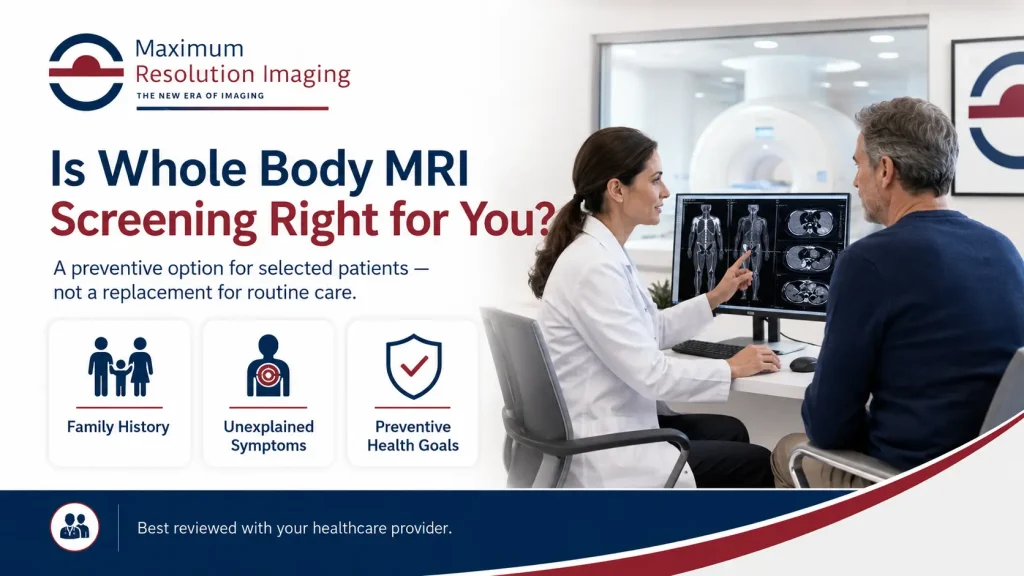
The best approach is to ask: “Will this scan help me make better health decisions?” If the answer is yes, it may be worth discussing. If the scan is only being done without symptoms, risk factors, or a clear purpose, it may lead to extra findings that are not always serious but still require follow-up.
What Can a Whole Body MRI Help Evaluate?
A whole body MRI can provide a broad look at internal organs and soft tissues. It may help identify findings that need further evaluation, especially when something unusual appears in the images.
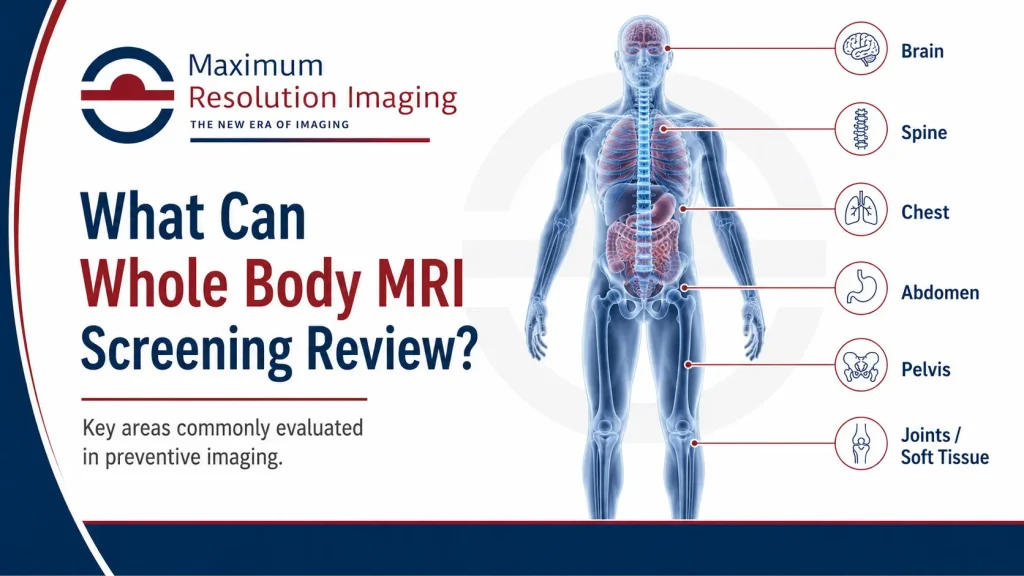
A whole body MRI can provide helpful imaging information, but it does not replace every medical test. Blood work, mammograms, colonoscopies, biopsies, ultrasounds, CT scans, and specialist exams may still be needed depending on your health concerns.
|
Area Reviewed |
What It May Help Evaluate |
|
Brain and Head |
Structural changes or abnormal findings |
|
Spine |
Disc issues, spinal changes, or nerve-related concerns |
|
Chest |
Internal structures and soft tissue changes |
|
Abdomen |
Liver, kidneys, pancreas, spleen, and other organs |
|
Pelvis |
Pelvic organs and surrounding soft tissues |
|
Muscles and Joints |
Soft tissue injury, inflammation, or joint concerns |
|
General Soft Tissue |
Unusual masses, swelling, or abnormal changes |
Whole Body MRI Screening vs Routine Preventive Care
Whole body MRI screening can support preventive health, but it is not the same as routine preventive care. Standard preventive care looks at your full health picture, including symptoms, family history, lab results, lifestyle, and recommended screenings.
|
Routine Preventive Care |
What It May Help Evaluate |
|
Brain and Head |
Whole Body MRI Screening |
|
Includes checkups, blood work, vaccines, and age-based screenings |
Provides detailed internal imaging of multiple body areas |
|
Often recommended for most adults based on age and risk |
Usually considered as an additional screening option |
|
Helps monitor blood pressure, cholesterol, diabetes risk, and general wellness |
Helps identify visible structural or soft tissue findings |
|
May include cancer screenings like mammogram or colonoscopy when appropriate |
Does not replace standard cancer screenings |
|
Usually guided by medical guidelines |
Best used when reviewed with a provider |
For most patients, whole body MRI screening should be viewed as an add-on, not a replacement for regular medical care.
Benefits of Whole Body MRI Screening
One major benefit of MRI is that it does not use ionizing radiation. It also provides detailed soft tissue imaging, which can be useful when reviewing organs, muscles, joints, the spine, and other internal structures.
Whole body MRI screening may offer:
For patients with certain risk factors or ongoing concerns, these insights may help guide the next step in care.
Limitations You Should Understand
Whole body MRI screening has limits. It may not detect every disease, and some conditions are better evaluated with other tests. For example, blood sugar concerns need blood testing, colon cancer screening may require colonoscopy, and breast cancer screening may still require mammography or breast imaging.
Another limitation is incidental findings. These are unexpected findings that may not be dangerous but still need follow-up. Sometimes, this can lead to more testing, cost, or anxiety.
This does not mean whole body MRI screening has no value. It means the scan should be used thoughtfully and results should be reviewed with a qualified medical provider.
Who May Consider Whole Body MRI Screening?
A whole body MRI may be worth discussing if you want a proactive look at your internal health or have risk factors that make you more concerned about early detection.
You may consider it if you:
What Happens During a Whole Body MRI?
During the scan, you will lie on a cushioned table that moves into the MRI scanner. You will need to stay still while the machine captures images. Movement can blur images and may affect the quality of the scan.
The MRI machine may make loud tapping or knocking sounds. Ear protection is usually provided. The technologist may communicate with you during the exam and help you feel comfortable.
The scan time can vary based on the areas being reviewed and the imaging protocol. Some scans may use contrast, while others may not. The imaging team will explain this before your appointment if it applies.
How to Prepare for Whole Body MRI Screening
Preparation is usually simple, but it depends on the type of scan being performed. You may be asked to remove jewelry, watches, hair pins, glasses, belts, phones, credit cards, and anything metal.
Wear comfortable clothing without metal zippers or buttons. If needed, you may be asked to change into a gown. Tell the imaging team if you have a pacemaker, metal implant, cochlear implant, surgical clips, metal fragments, kidney concerns, pregnancy, or anxiety in enclosed spaces.
Following the right preparation steps helps support safety, comfort, and clearer imaging results.
Is Whole Body MRI Screening Safe?
MRI is generally considered safe for many patients because it does not use ionizing radiation. However, MRI uses a strong magnet, so safety screening is very important.
Patients with certain implants, devices, or metal fragments may need special review before having an MRI. Some devices are MRI safe, some are MRI conditional, and some may not be safe in an MRI environment. Always share your medical history and implant details before the scan.
Whole Body MRI Screening at Maximum Resolution Imaging Center Texas
Maximum Resolution Imaging Center Texas offers advanced MRI services for patients in Richmond, Houston, and nearby communities. The center focuses on high-quality imaging, patient comfort, accurate results, and a smooth imaging experience.
If you are considering whole body MRI screening, the team can explain what the scan may include, how to prepare, what to expect, and how results are handled after imaging.
Final Thoughts
Whole body MRI screening may be useful for selected patients who want more imaging insight into their health. It may support preventive planning, early detection conversations, and a better understanding of internal structures.
However, it is not necessary for everyone and should not replace routine checkups, blood work, or recommended cancer screenings. The best decision depends on your symptoms, risk factors, family history, and health goals.
If you are considering whole body MRI screening in Richmond or Houston, TX, Maximum Resolution Imaging Center Texas can help you understand the process and decide your next step.
Schedule Whole Body MRI Screening in Richmond or Houston, TX
If you want to learn whether whole body MRI screening is right for you, contact Maximum Resolution Imaging Center Texas. Our team can help you understand the scan, preparation, comfort options, and appointment process.